

Integration with Smart Homes: Veneer Panels for Concealed Doors and AV Walls

- Key Takeaways
- The philosophy of seamlessness
- Integrating concealed door systems
- Materiality and mechanics
- Smart home and AV integration
- Beyond the door panel
- Navigating codes and compliance
- Conclusion
- Frequently Asked Questions
- What is a concealed door?
- Why choose concealed door systems for homes or offices?
- Can concealed doors be integrated with smart home technology?
- What materials are commonly used for concealed doors?
- Are concealed doors safe and compliant with building codes?
- How do concealed doors impact the acoustics of a room?
- What maintenance do concealed doors require?
Key Takeaways
- The seamless design of concealed doors completes the luxurious look and feel of your spaces, providing a minimalist aesthetic without compromising style or privacy.
- Incorporating hidden door units involves thoughtful design, choosing the right materials, and working with experts to achieve both safety and versatility in different settings.
- Selecting premium materials and sophisticated hardware is key for the longevity, soundproofing, and functional ease of secret door installations.
- Smart home and audiovisual integration with concealed doors enables sensor automation and hidden display installation.
- Coordinating elements such as wall panels, built-in furniture, and architectural lighting enhance the allure and harmony of rooms with concealed doors.
- We make sure to meet all building codes and regulations, which is crucial to ensure safety, longevity, and optimal performance of concealed door installations in homes.
Concealed doors are those that are constructed to integrate with their environment, hidden in walls, panels or even bookcases. Folks employ them to design sleek lines in rooms, generate privacy or screen storage and safe rooms.
Featuring a variety of styles such as flush, sliding or pivot, these doors complement both residential and office spaces. To select the appropriate style, it is useful to understand the popular choices and how they suit various requirements and environments.
The philosophy of seamlessness
Seamlessness is the art of making things look and feel complete. For luxury homes, that translates into clean lines and seamless finishes. No jagged hems or crowded ruffles. Hidden doors mean a lot to this style. They employ concealed hinges and frames to merge the door with the wall. There are no knobs or handles to catch on. The effect is clean, elegant, and serene.
I’ve seen this in modern, minimalist, Scandinavian-inspired homes. All of these styles prefer simple forms, soft shades, and little lines as possible. The philosophy of seamlessness is not merely about what you can see. It defines how a room functions. Secret doors allow rooms to bleed into one another without pauses or transitions.
To stroll from room to room seems as natural. There are fewer visual blocks; therefore, even small spaces feel bigger. This flow renders living spaces more spacious and convenient. Sometimes hidden doors assist with privacy. For instance, a door to a study or quiet room can disappear into the wall when not required.
This keeps it private but does not disrupt the aesthetics of the primary space. What the minimalist appearance frequently requires is great expertise and attention. Each piece needs to click into place. Flush doors and concealed hinges require precise labor to align with the wall.
Installers need to inspect and tweak every single one. If the door sits out even a little, it ruins the entire effect. This attention to detail is part of why seamless design signifies luxury. It says the home is reinforced with pride and quality components.
Secret doors can make a home feel magical. Hidden doors or rooms have always been associated with luxury and intrigue. Today, this concept melds with new design patterns. A hidden door in a living room could open to a walk-in closet or a private library.
These little touches are fun and classy to a home. Seamlessness is handy. It conceals storage, aids in cleanliness, and provides additional opportunities to utilize space. For instance, a secret door can conceal a laundry room or pantry.
When shut, it maintains the room’s neat, open appearance. It makes daily life feel less chaotic and stressed.
Integrating concealed door systems

Incorporating hidden door mechanisms into a design requires careful consideration from the beginning. Architects and contractors have to think about how the door aligns with the wall, the door’s secret frame, and the tech that keeps it all flush. This can help lend a room a clean, seamless appearance.
If done right, a concealed door is nearly invisible, conforming to wall panels, joinery, or cladding and making interior spaces feel flexible and spacious. Many architects and builders incorporate these doors to conceal closets, pantries, or home offices, allowing the design to flow uninterrupted.
Benefits of concealed doors for adaptable spaces:
- Combine walls and doors into a seamless surface.
- Save space, ideal for small rooms or tight layouts.
- Allow hidden entry to private rooms or storage spots.
- Support flexible room layouts and multi-use spaces.
- Can match different design styles, from modern to classic.
- Help keep rooms looking clean and free of clutter.
They increase security. They conceal entry points without attracting attention, complicating the efforts of intruders to identify access points. Others employ hard-wearing frames, reinforced cores, and tamperproof locks.
They’re suitable for protected areas such as safe rooms or executive studies yet remain stylish. Custom finish and hardware options allow you to customize the doors to your room, maintaining equilibrium between style and function.
Working with AV system integration teams is crucial for bigger projects. Concealed doors frequently require wiring for security, lighting, or automation. Early collaboration among architects, AV techs, and installers helps keep design clashes at bay and builds faster.
Well thought-out design allows for easier future upgrades or repairs.
1. Conceptual design
Begin with having your design team agree upon the appearance and function of the concealed doors. Drawings and sketches illustrate the diffusion of the doors into the wall. Models and mock-ups allow teams to experience the flow of people and light, verify the fit, and identify problems before construction begins.
Communicating with every trade keeps the design cohesive.
2. Structural planning
Hidden doors require concealed door frames that work seamlessly with their special hinges and flush door designs. Builders must ensure that the wall can support the weight and that the door opening is square and strong. They check codes, consider the load, and collaborate with engineers to ensure safety and durability.
3. Material selection
Choose materials that endure and complement the room, such as veneers, solid wood, or stone for the door’s face. Others incorporate hidden door systems, including concealed door frames and modern door designs. The right material assists with soundproofing and accommodates tech requirements, such as AV gear wiring.
4. Hardware specification
Selecting the proper hinges, locks, and latches is essential. Adjustable concealed hinges allow the door to sit flush, while soft-close or magnetic catches enhance the seamless sensation. Hardware has to look good but it has to be durable for everyday use.
Trusted brands make projects fall into place.
5. Final installation
Expert installers ensure the door lies flat and swings correctly. They inspect every component, including hinges, locks, and catches, to maintain smooth operation. Homeowners or staff receive a quick tutorial on how to operate and maintain the door.
Installers leave notes and photos for the next repair.
Materiality and mechanics
The substance of a hidden door defines its appearance, durability and functionality. From the core to the finish, materiality will determine how much your door camouflages or catches the eye, how long it will stand up, and how buttery smooth it feels to open and close (think hinges and tracks). Decisions have to consider the environment—humidity, commute, and fashion count.
Materiality and mechanics are inseparable, with every selection influencing behavior in the space.
Material Type | Strength | Weight | Moisture Resistance | Maintenance Level | Longevity |
|---|---|---|---|---|---|
Solid Wood | High | Heavy | Low | High | High |
MDF (Fibreboard) | Moderate | Medium | Moderate | Low | Moderate |
Metal | High | Heavy | High | Low | Very High |
Glass | Low | Light | High | Low | Moderate |
Plywood | Moderate | Medium | Moderate | Moderate | Moderate |
What changes the mechanics is how these materials are used. Metal and glass work wonderfully for commercial spaces, typically with pivot hinges or top-hung tracks. Solid wood or MDF, more common in homes, require a more careful balance for smooth action.
Wooden tracks, as in classic shoji doors, provide silent glide but invite mold in humid environments and require more maintenance than metal hardware. Hinges, tracks, and pivots influence how your door swings, slides, or pivots, impacting both feel and durability.
Veneer choices
Veneer Type | Look | Durability | Upkeep | Customization |
|---|---|---|---|---|
Real Wood | Warm, Authentic | High | Moderate | High |
Engineered Wood | Consistent, Smooth | Moderate | Low | Moderate |
Laminate | Wide Variety | Moderate | Low | High |
Real wood veneers add warmth and depth. They wear in, not out. Engineered or laminate veneers are more wear resistant, but can potentially lose the unique grain and tactile sensation of authentic wood.
Veneer selection impacts the resilience of your door. Solid wood requires ongoing maintenance, while laminate is more indestructible and effortless to clean. All finishes can be matched to any design from ultra-modern gloss to rustic matte, allowing designers to link camouflaged doors to the entire room.
Core construction
Solid core construction is essential for soundproofing and thermal insulation. It blocks sound between rooms, making it an excellent choice for bedrooms or offices. Hollow cores are lighter but less tough, so they don’t hold up as well in high traffic areas.
Honeycomb or composite cores offer a compromise; they are lighter than solid wood but provide greater sound control than hollow doors. Good core design prevents warping and keeps the door straight.
At schools or hospitals, rugged composite cores endure daily bumps more effectively. Some makers even use fire-rated or moisture-resistant cores for safety and longer service life, particularly in commercial or other high-traffic areas.
Hinge technology
Hidden hinges keep the look clean with no hardware showing. Such are the new hidden hinges that support heavy doors and keep them cuff to wall. Pivot hinges, typical for glass doors, are anchored at the top and bottom.
Therefore, no side frame is necessary. This allows doors to swing both ‘ways’ or open extra wide. Long-lasting hinges, stainless steel for example, withstand years of use without sagging.
The right hinging also makes the door more secure because it’s more difficult to steal hidden hardware. Selecting hinges, tracks, and handles determines the ease of use and fit within the space. Side hinges require a frame, but pivots and tracks can allow the door to blend seamlessly in.
Smart home and AV integration

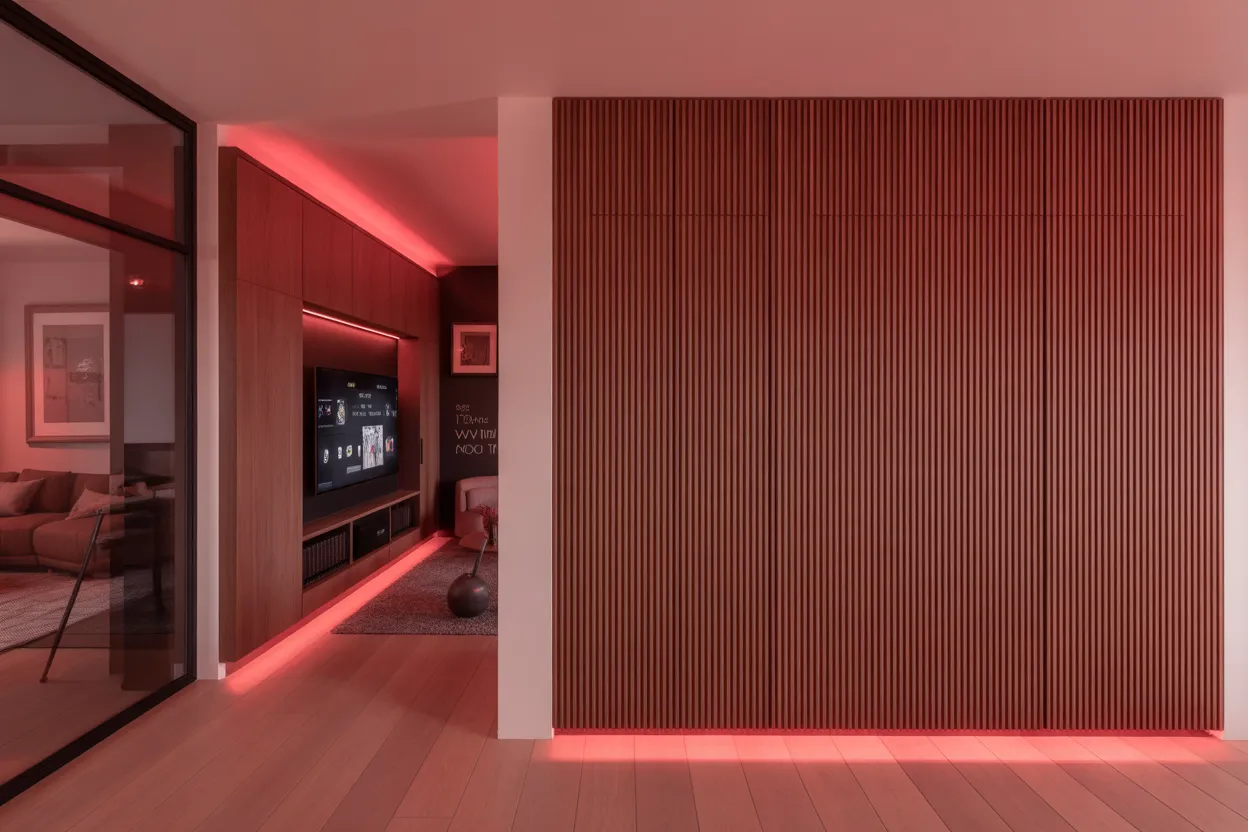
Smart home integration with hidden doors is becoming the norm in new homes, particularly in those where both style and substance need to coexist. Smart home and AV integration can fit right in with hidden doors — behind your home automation, AV systems, and sensors — keeping spaces sleek and uncluttered while providing a rich user experience.
Homeowners want it to be seamless. They want technology to enhance life but not detract from the aesthetic of the space.
- Smart lighting and climate control systems
- 4K video distribution and surround sound setups
- In-wall or in-ceiling speakers
- Automated blinds and smart locks
- Remote water main control
- Hardwired or wireless security systems
- Flat-panel TV integration in custom cabinetry
- Remote access and monitoring
- Scene-setting for movie nights or gaming
AV integration is key for creating immersive environments. Concealed doors can hide AV racks, server rooms, or private home theaters, keeping tech out of sight until it’s in use. With smart planning, these doors can fit things like in-wall speakers or hidden displays, so the aesthetic remains clean and the space is prepared for entertainment.
The wiring, equipment placement and system syncing require professional AV integrators, ensuring the end result is seamless and dependable. Integration for these systems may be as little as $500 to $1,000 for the simplest setups or more than $10,000 for luxury projects.
Acoustic transparency
Acoustic transparency is important in rooms with hidden doors, particularly in residences where discretion and sound fidelity are appreciated. A noise-blocking hidden door can keep a room quiet, even if there is a movie or gaming session going on in the room next door.
The build and materials of the door mean a huge difference. Dense cores, rubber seals, and high-quality hinges can reduce the sound that leaks through. Others use layered glass or composite panels that muffle sound but maintain the door’s invisibility.
The door’s acoustic performance should match the rest of the wall, none of that ‘weak-spot’ noise. In these high-end homes, the owner usually wants both privacy and spectacular sound, so meticulous planning is a necessity.
Sensor concealment
Concealed door systems usually employ sensors to determine when doors should open, lock, or activate other features such as lighting. These sensors have to be nicely concealed so they do not ruin the aesthetics, but they have to remain accessible for maintenance.
Designers can hide sensors behind trim, in door frames or under panels that match the wall. This keeps the setup nice and clean and modern. If you put sensors inside the door or frame, you can automatically lock your doors or notify homeowners when a door is left open.
Since some sensors are linked to security systems or remote monitoring, secure sensor placement is key for safety. For security, hardwired sensors are better because they cannot be blocked like wireless ones.
Display integration
Certain hidden doors can conceal displays or screens to make a room more multi-purpose. For example, a flush door may open to reveal a flat panel TV or a control screen for the home, maintaining a clean aesthetic while keeping technology within arm’s reach. This clever design ensures that electronics remain hidden from view when not needed.
Technical requirements for this arrangement include power, network cabling, and ventilation for electronics, which should not make the door bulky or conspicuous. Designers and AV specialists must collaborate to ensure the display fits properly and functions optimally, with convenient access for maintenance.
The outcome is a room that appears minimal yet can accomplish far more, from hosting movie nights to controlling security, showcasing the benefits of undercover architecture.
Beyond the door panel

Concealed doors, such as those found in a hidden door store, are more than just functional; they significantly contribute to defining a room’s feeling and functionality. In luxury spaces, details around the door, including hidden hinges and flush door designs, mean a lot. Design elements like wall panels and built-in furniture allow concealed doors to either pop or disappear as required by the space.
Wall panel systems
Wall panel systems allow designers to match the door to the wall, creating a hidden door store effect where the door virtually disappears. Some of our favorite selections include flat panels, traditional English wainscoting, and contemporary vertical slats. For a Scandinavian vibe, clean lines and light wood work beautifully, enhancing modern home designs.
In loft styles, metal or concrete panels provide an industrial edge. Color is also important; dark or bold colors can help a door disappear into a dramatic wall, while lighter shades are perfectly suited for open interiors, making them ideal for spaces like a hidden closet or bathroom.
Seamless panels conceal door outlines, adding to a feeling of flow wall-to-wall. Others feature panel mouldings or trim that go right over the door, forming one cohesive design. This trick isn’t new—ancient Egyptians and classic European interiors employed similar techniques to create secret rooms.
Custom wall panels allow homeowners to choose materials, textures and even soundproofing. MDF, natural wood and laminate are popular, although glass or metal panels can suit special requirements. Selecting the proper material makes the door endure and harmonize with the rest of the room.
For best results, panels and doors should be installed with precision. The door opening needs to be plumb and square; otherwise, the door won’t sit flush. Adjustable hidden hinges are essential for achieving an ideal fit and maintaining the aesthetic of the concealed door frames.
Integrated furniture
Integrated furniture can conceal doors behind bookcases, wardrobes, or wall units. For tiny areas, a door could be a closet or fold-out desk. In a bigger house, a hidden door in a built-in cabinet can open to a secluded office or walk-in closet.
Blurring the line between furniture and doors can save floor space. It helps to maintain clean sightlines which make rooms feel serene and organized.
A cohesive appearance is essential. The same materials and finishes on the furniture and doors help them blend. To get this just right, you usually need a talented designer or carpenter who’s into furniture and doors.
Architectural lighting
Lighting defines how individuals perceive and interact with secret doors. Subtle, accent lights can illuminate a door without drawing attention. LED strips along the wall or floor provide subtle hints, while spotlights can highlight art or features by a door.
Lights can imply a mood or open up a space. Smart controls allow users to adjust the impact throughout the day.
Innovative lighting, such as backlit panels or color-changing LEDs, can lend a space a futuristic or timeless vibe. Lighting designers assist in harmonizing illumination, decor, and seclusion.
Navigating codes and compliance
While concealed doors integrate into walls and maintain a clean aesthetic, their camouflaged appearance introduces additional challenges when navigating codes and compliance. Building codes seriously impact doorways. They keep us all secure and ensure spaces function for all users regardless of their requirements.
There are building codes for concealed doors regarding their size, access, operation, and safety. Each accessible area or room must have at least one door or gate that is accessible. Controls must operate with one hand, with no tight grip or twist, and no more than 22 newtons of force. This rule applies to most openable doors and gates, including those with a flush door panel design. Fire doors and external doors can have a higher force if required for safety reasons.
Power-operated doors are typical in locations where people might have difficulty opening doors. That covers places such as care homes or hospitals. These doors should comply with the BHMA standards. For instance, swinging, sliding, and folding doors are required to comply with BHMA A156.10, and power-assisted or low energy swinging doors must comply with BHMA A156.19. Low energy doors typically require a user to press a plate or control, making this a nice compromise in locations with continuous but not heavy traffic.
Of all hidden door mechanisms, maneuvering clearances are paramount. These clearances imply enough space for wheelchair or mobility aid users to access, open, and navigate through the door. This includes manual as well as power-operated doors. The opening force and control operation may not prevent any person from operating the doors, especially those designed with hidden hinges.
Breakout force, or the force needed to open a door in an emergency, can be as much as 800 newtons (180 pounds) but must drop to 578 newtons (130 pounds) should there be a power cut, fire alarm, or smoke alert. It is the job of architects and builders to design and verify that these regulations are fulfilled from the beginning, particularly when dealing with jib doors.
They have to select hardware and configurations that satisfy any applicable code requirements, such as clear width, push plate height, and lever handle use. They deal with inspectors and local rules, which can be stricter than global codes. Best practice is checking specs, testing doors post-install, and maintaining records for audits or spot checks.
Conclusion
Concealed doors outline crisp edges and provide rooms with a sleek appearance. They merge with walls and mask pantry or office nooks. Many people use them for home theaters or closets. Secret doors hide smart home tech and block noise. Wood, glass, and metal all work, so you have choices of style. Choose flush handles or soft-close hinges. You discover these doors in houses, offices, and boutiques. To comply with local regulations, check fire or safety codes before you select a mechanism. A clever choice today spares hours and hassle down the road. To see what suits your space, contact artisans or local craftsmen. They assist you in designing, selecting, and installing your perfect door.
Frequently Asked Questions
What is a concealed door?
A concealed door, often referred to as a flush door, is designed to be integrated within a wall or surface, making it virtually invisible. This modern door design offers a clean aesthetic, popular in contemporary architecture and interior design.
Why choose concealed door systems for homes or offices?
Concealed door systems, including frameless doors and jib doors, have a sleek and minimalist look. They assist in creating seamless wall surfaces, fueling contemporary design sensibilities while maximizing space and providing additional privacy.
Can concealed doors be integrated with smart home technology?
Yes, hidden doors can seamlessly integrate with smart home and AV systems, including electronic locks and remote access, enhancing the convenience of modern home designs and undercover architecture.
What materials are commonly used for concealed doors?
Concealed doors, including options like frameless doors and jib doors, are constructed from an array of materials such as wood, metal, glass, or composite panels, tailored to meet your performance and durability needs.
Are concealed doors safe and compliant with building codes?
Provided they are properly installed, concealed doors, such as flush door panels and jib doors, comply with most fire and building codes.
How do concealed doors impact the acoustics of a room?
These concealed doors, including flush door designs, can assist with room acoustics with their flush, sealed surface. Even with good sound insulation and noise control, proper installation and material choice matter.
What maintenance do concealed doors require?
Concealed doors, such as a flush door or jib door, need to be regularly checked for alignment and the proper functioning of the hardware, including hidden hinges or tracks, which may require cleaning and lubrication.